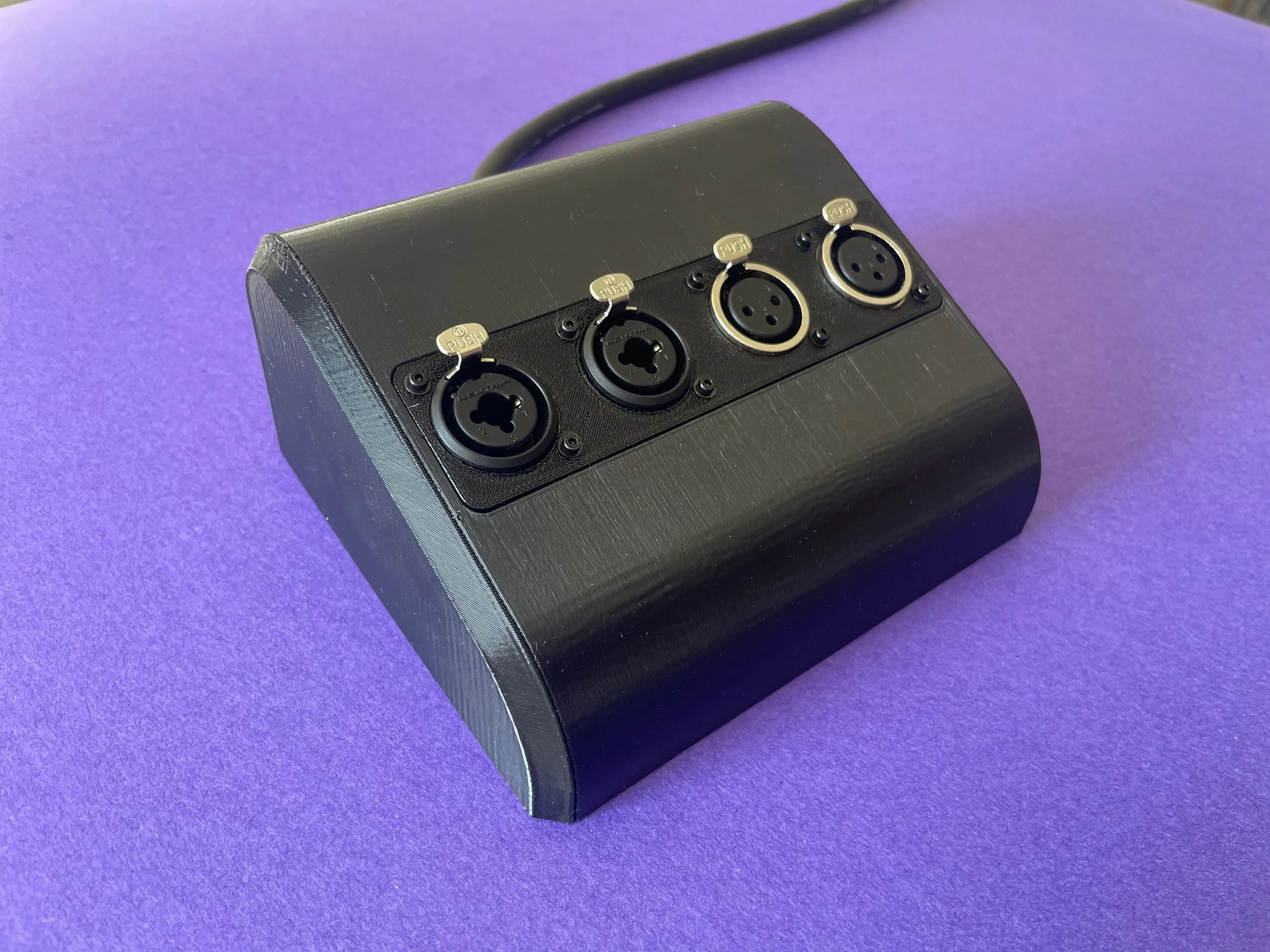
Input Lobby
Cycle 1: Establish Form
Design
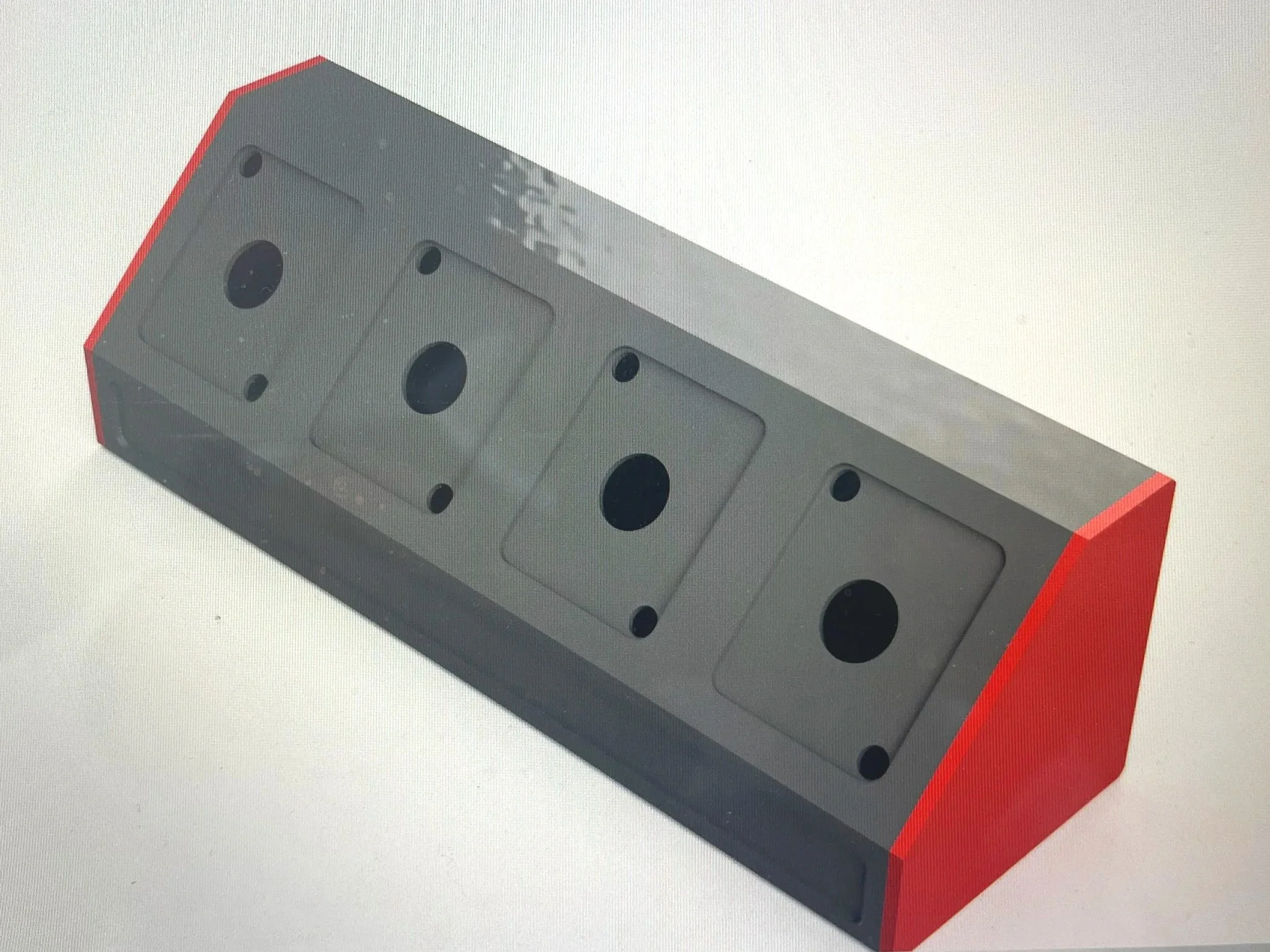
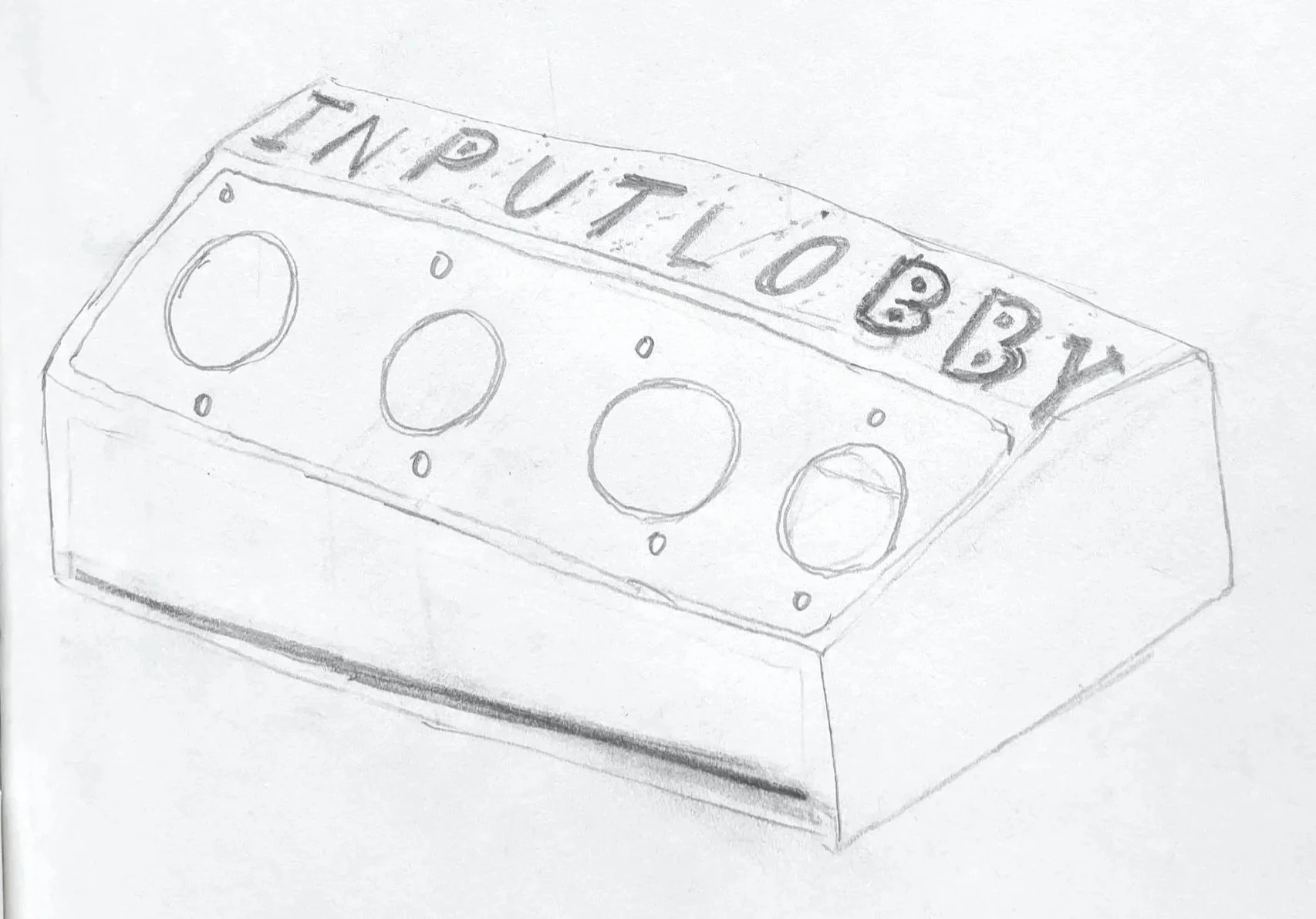
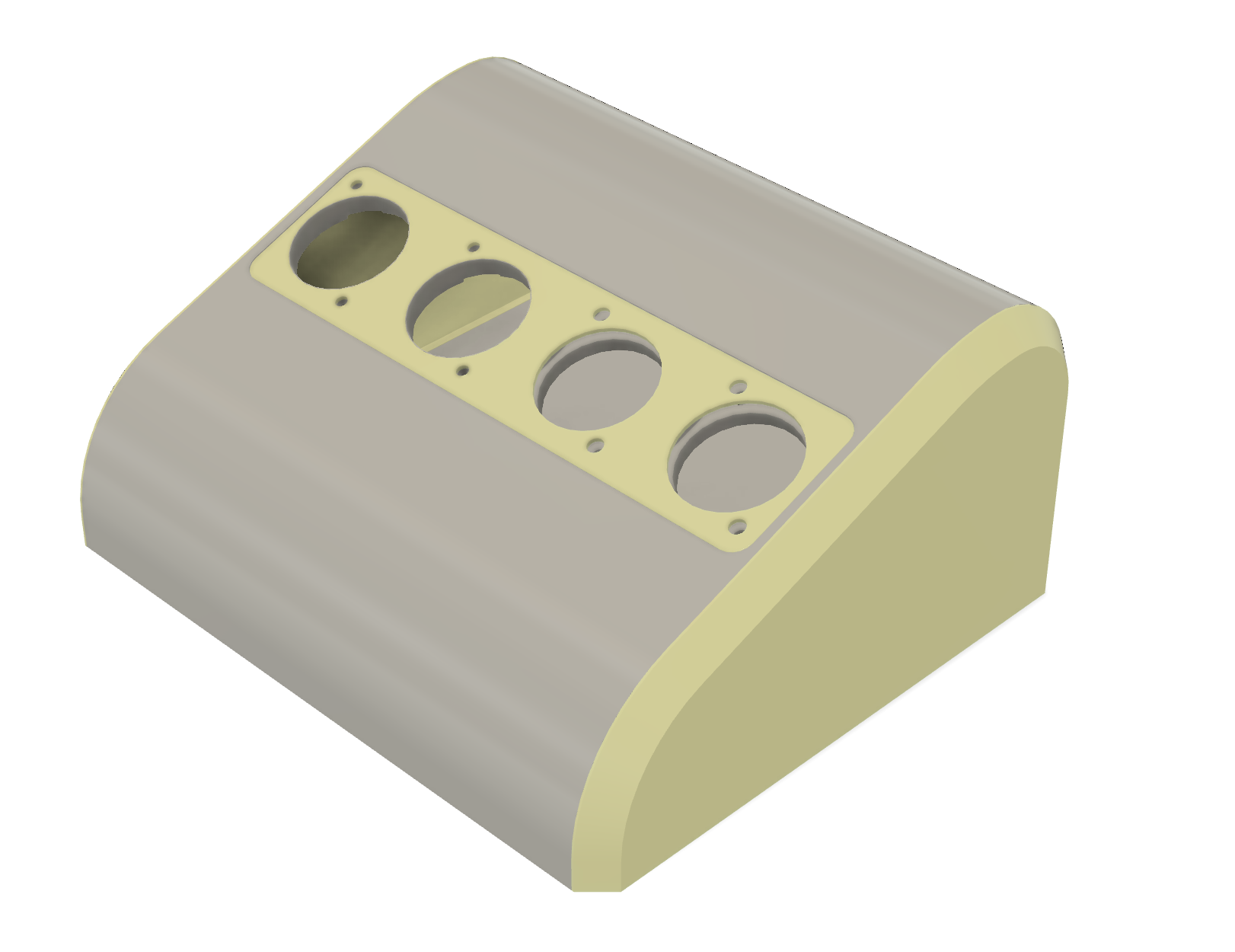
Defined the brief: a sleek, four-channel studio snake box with a minimal, fully 3D-printed enclosure.
Prototype
CAD review only; the design did not advance to physical prototyping.
Revision
The first form felt too small, light, and blocky to achieve the desired elegant, sophisticated presence.
Cycle 2: Add Presence
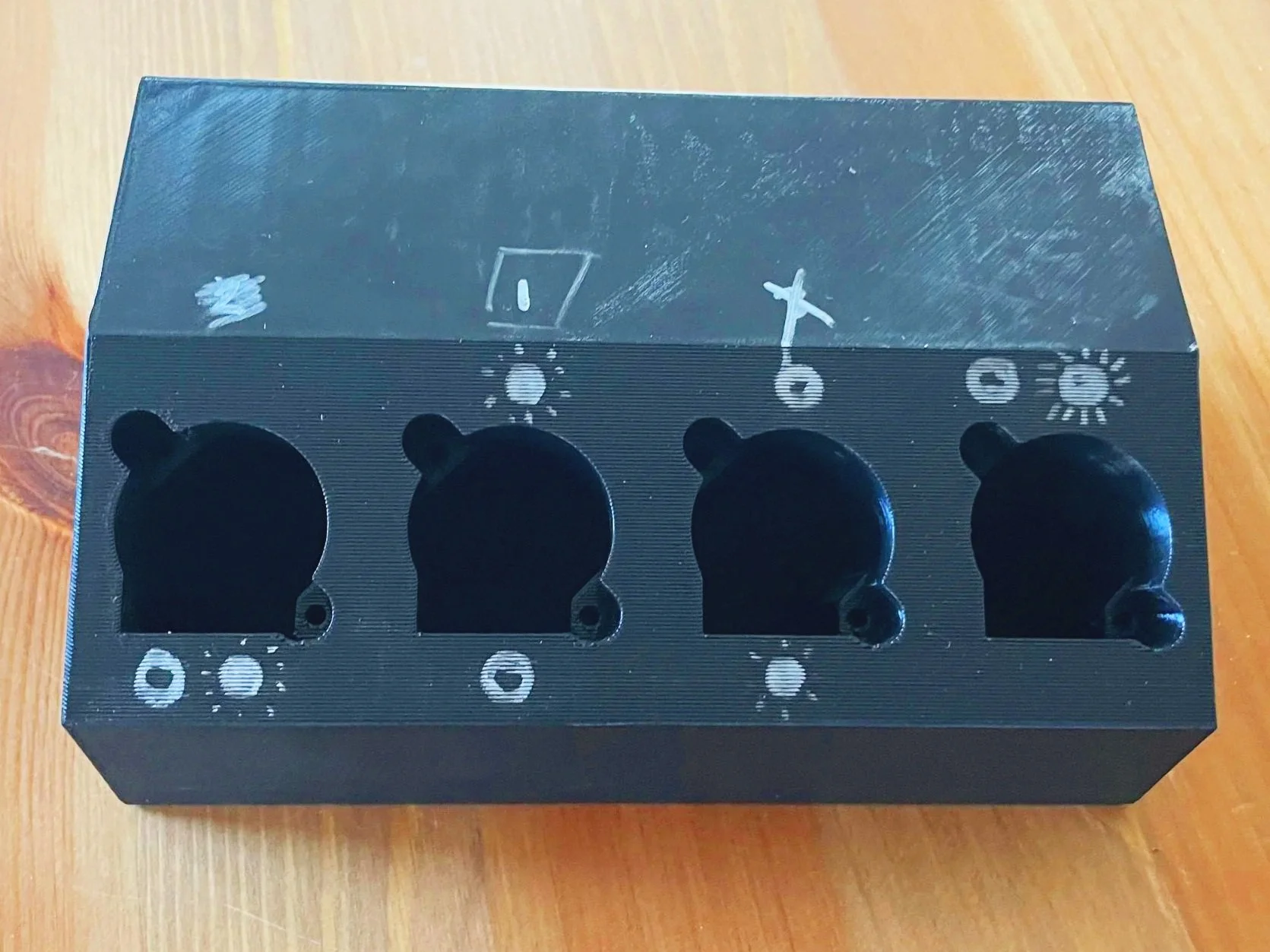
Design
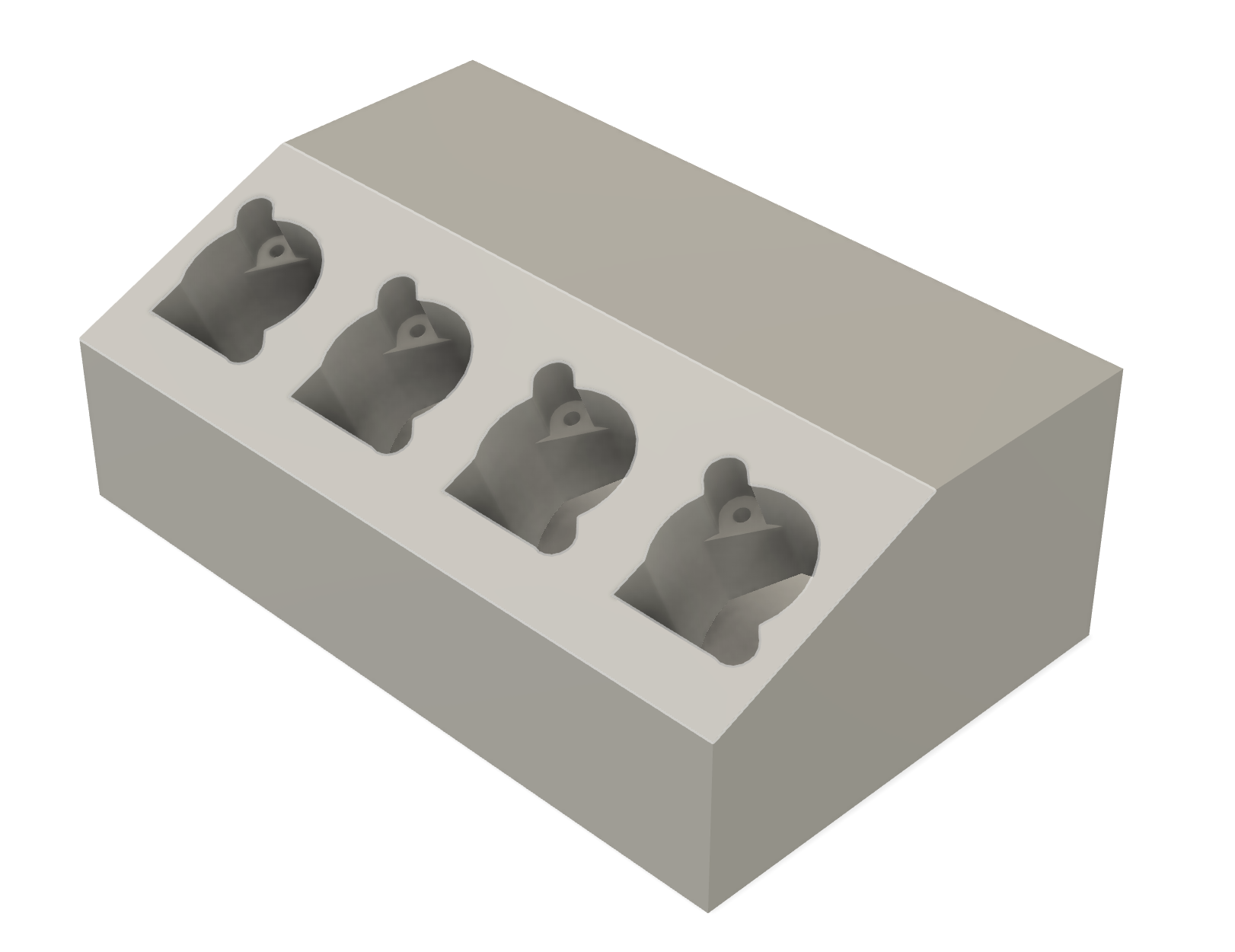
Extended the body in length and depth and explored a more substantial solid-body form.
Prototype
Refined the enclosure around the increased proportions and began exploring room for an internal preamp.
Revision
The added volume improved presence, but the form remained too blocky. Heat dissipation and internal assembly also became concerns.
Cycle 3: Enhance Form
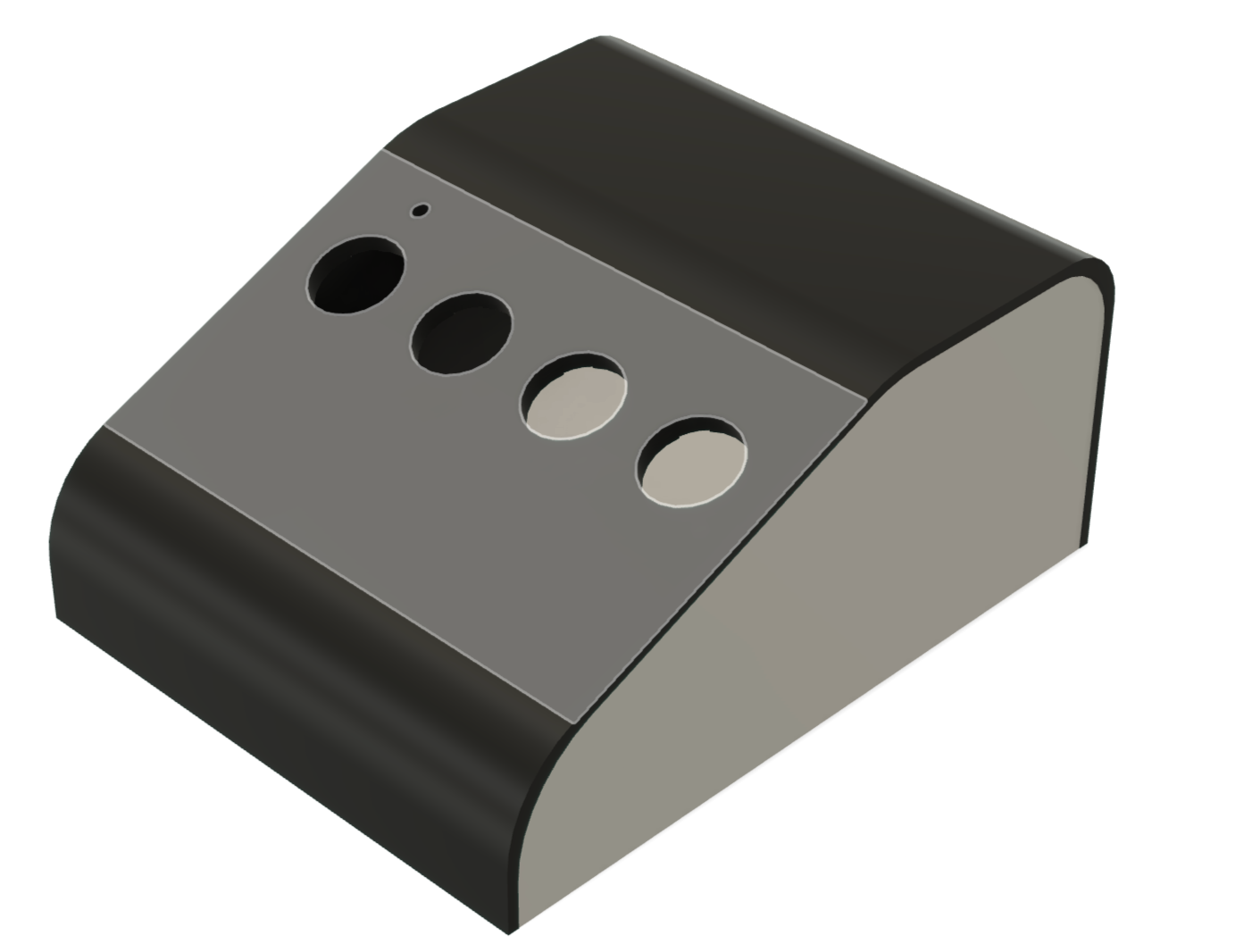
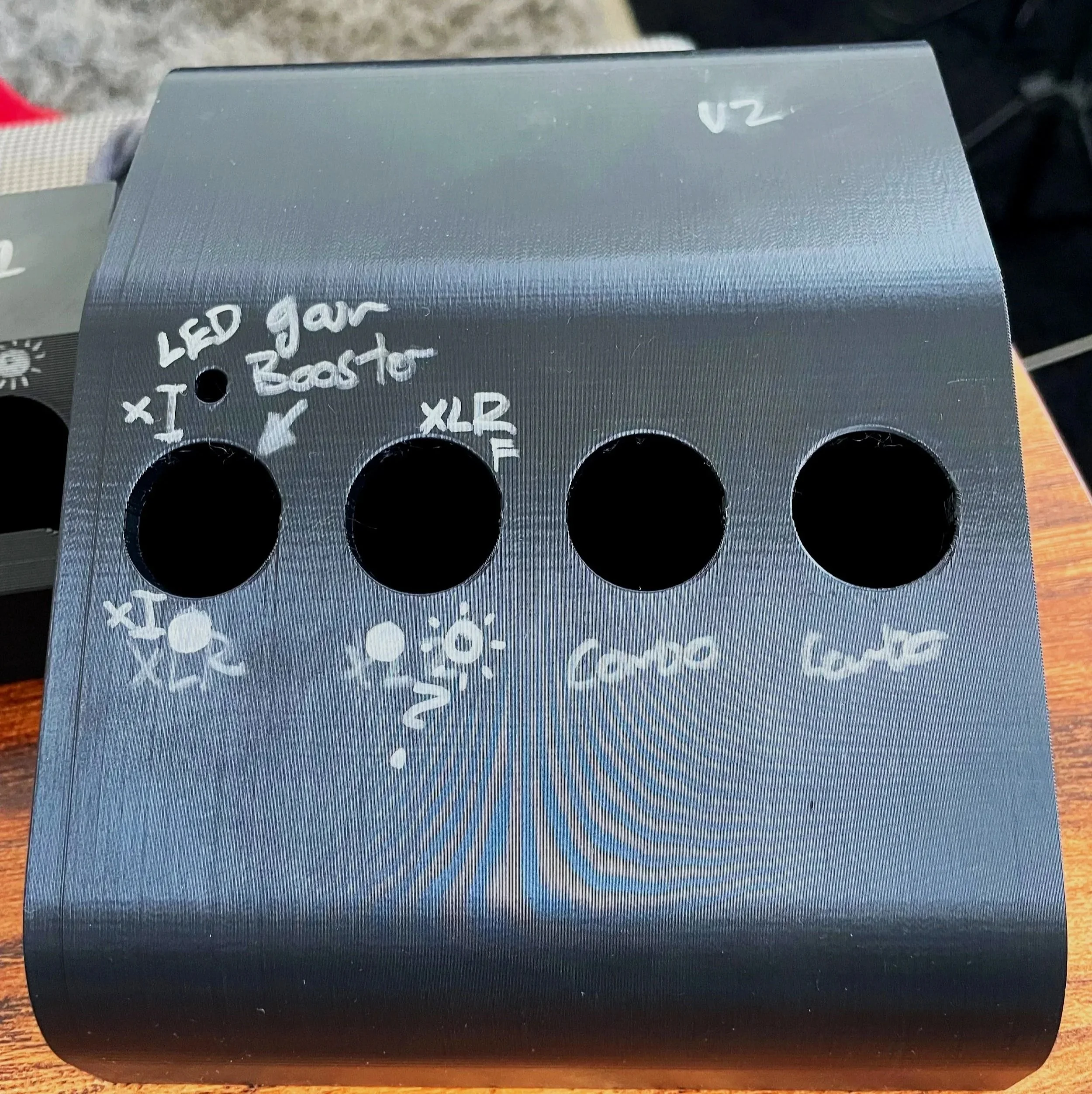
Design
Extended the body in length and depth and explored a more substantial solid-body form.
Prototype
Refined the enclosure around the increased proportions and began exploring room for an internal preamp.
Revision
The added volume improved presence, but the form remained too blocky. Heat dissipation and internal assembly also became concerns.
Cycle 4: Refine Details
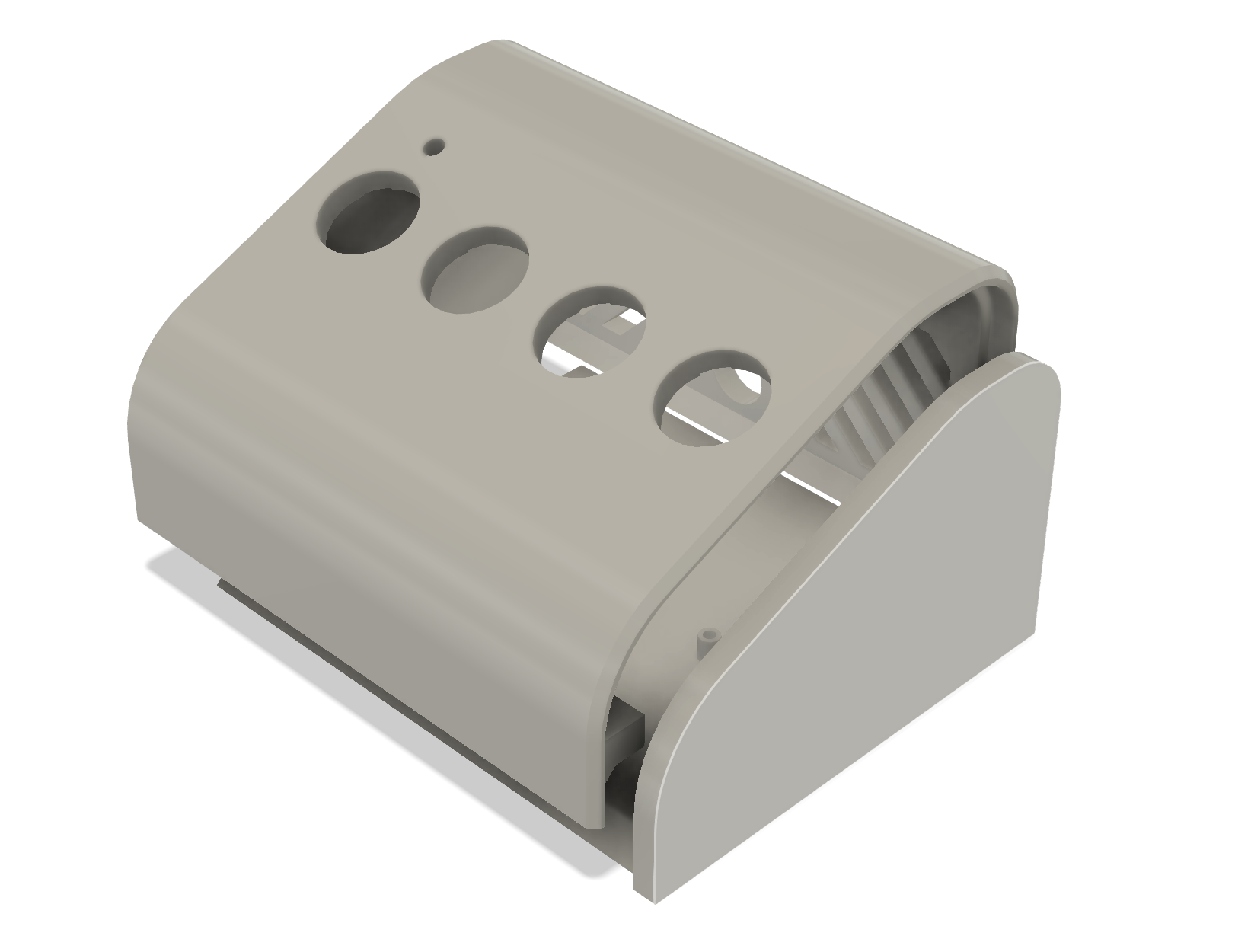
Design
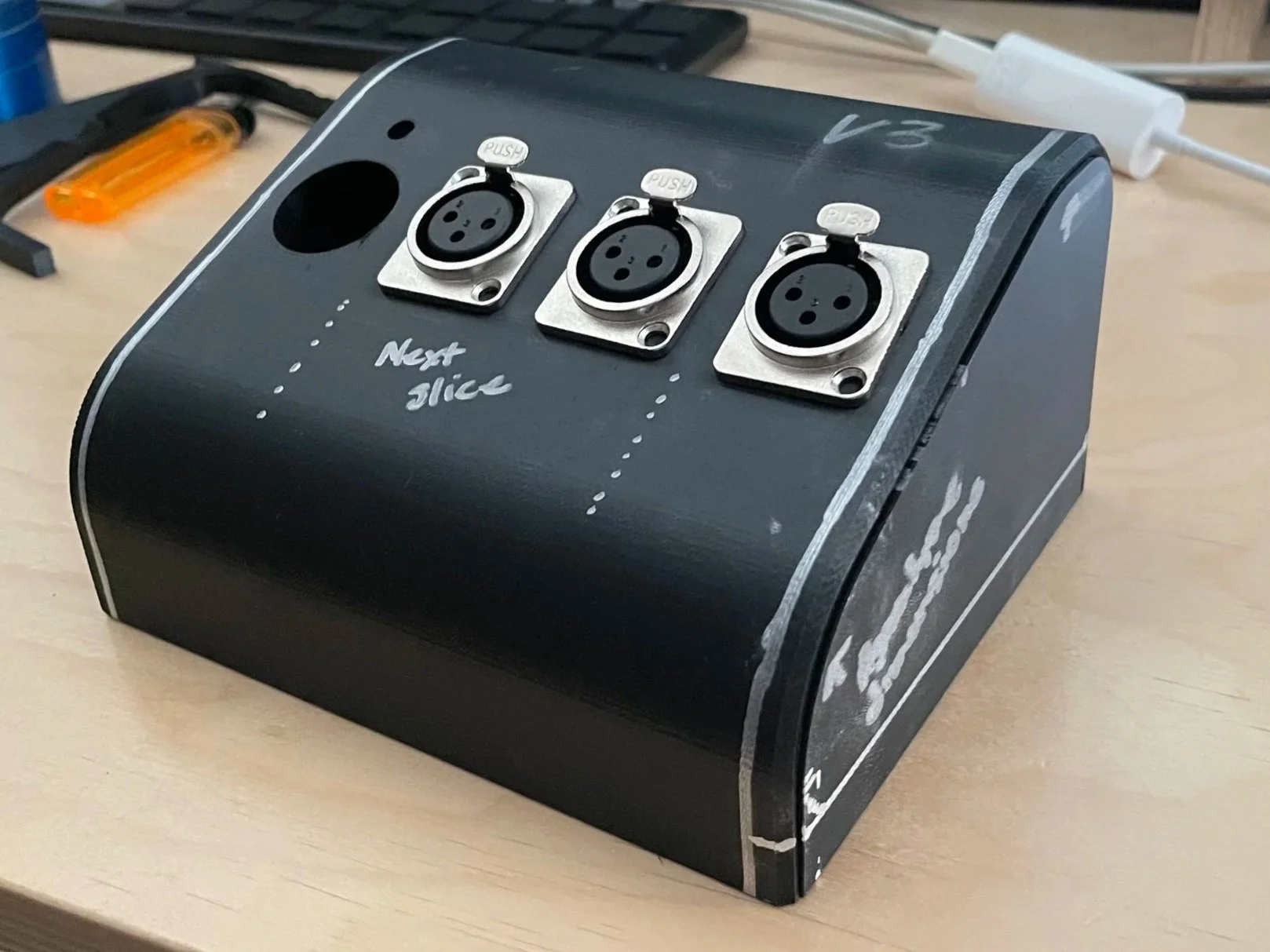
Added rear ventilation, refined the jack recess, shortened the nose, reduced height, and moved from PLA to ABS.
Prototype
Tested the revised geometry and material while refining the enclosure's mating surfaces.
Revision
ABS improved heat resistance but introduced warping. The form still needed to be slimmer, the vents more refined, and the enclosure's mating and locking strategy reconsidered.
Cycle 5: Solve Assembly
Design
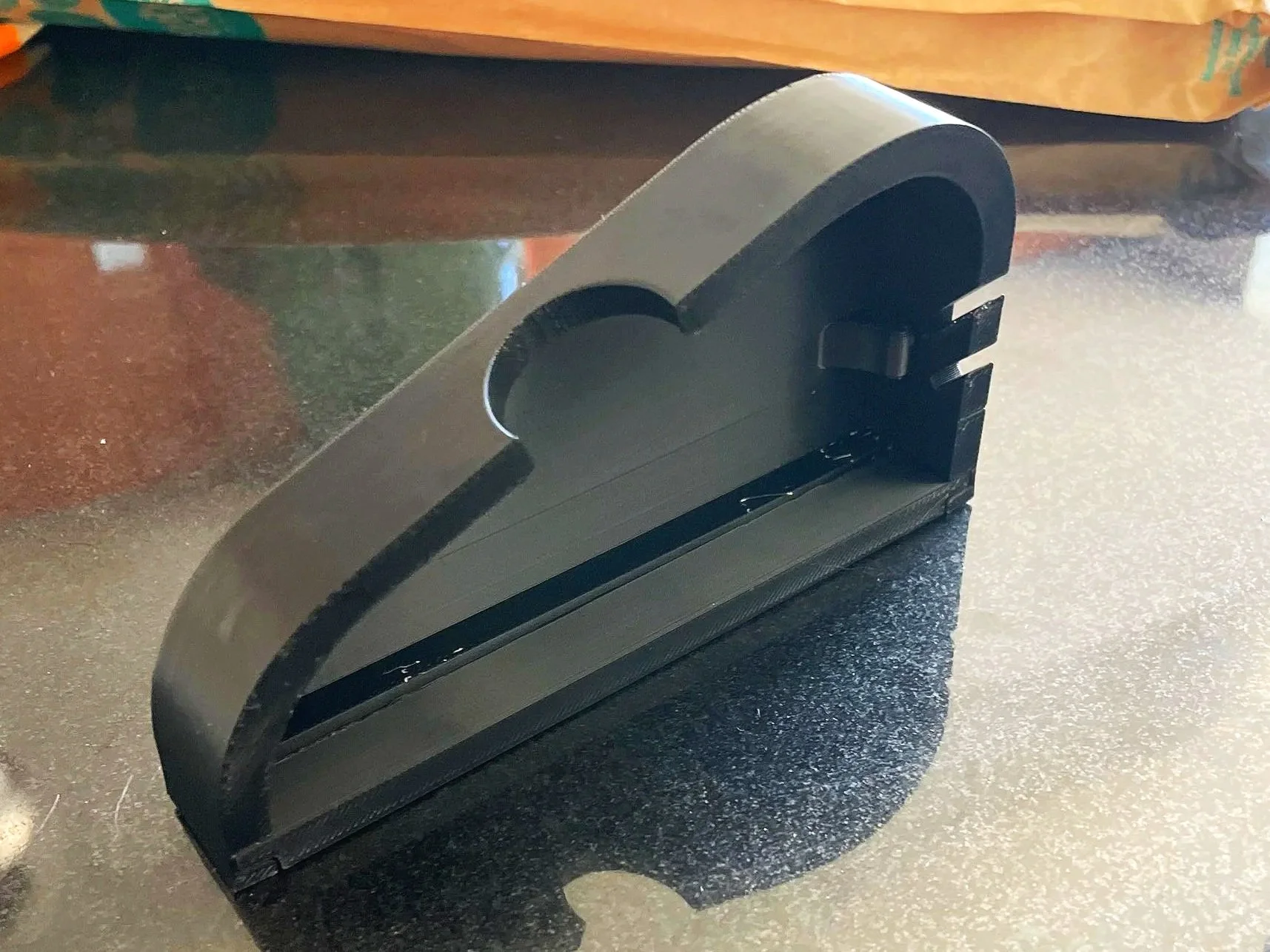
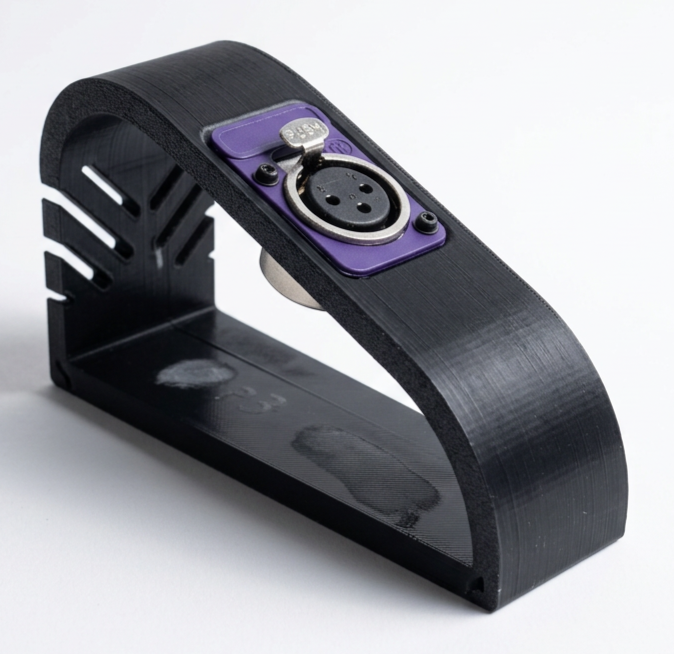
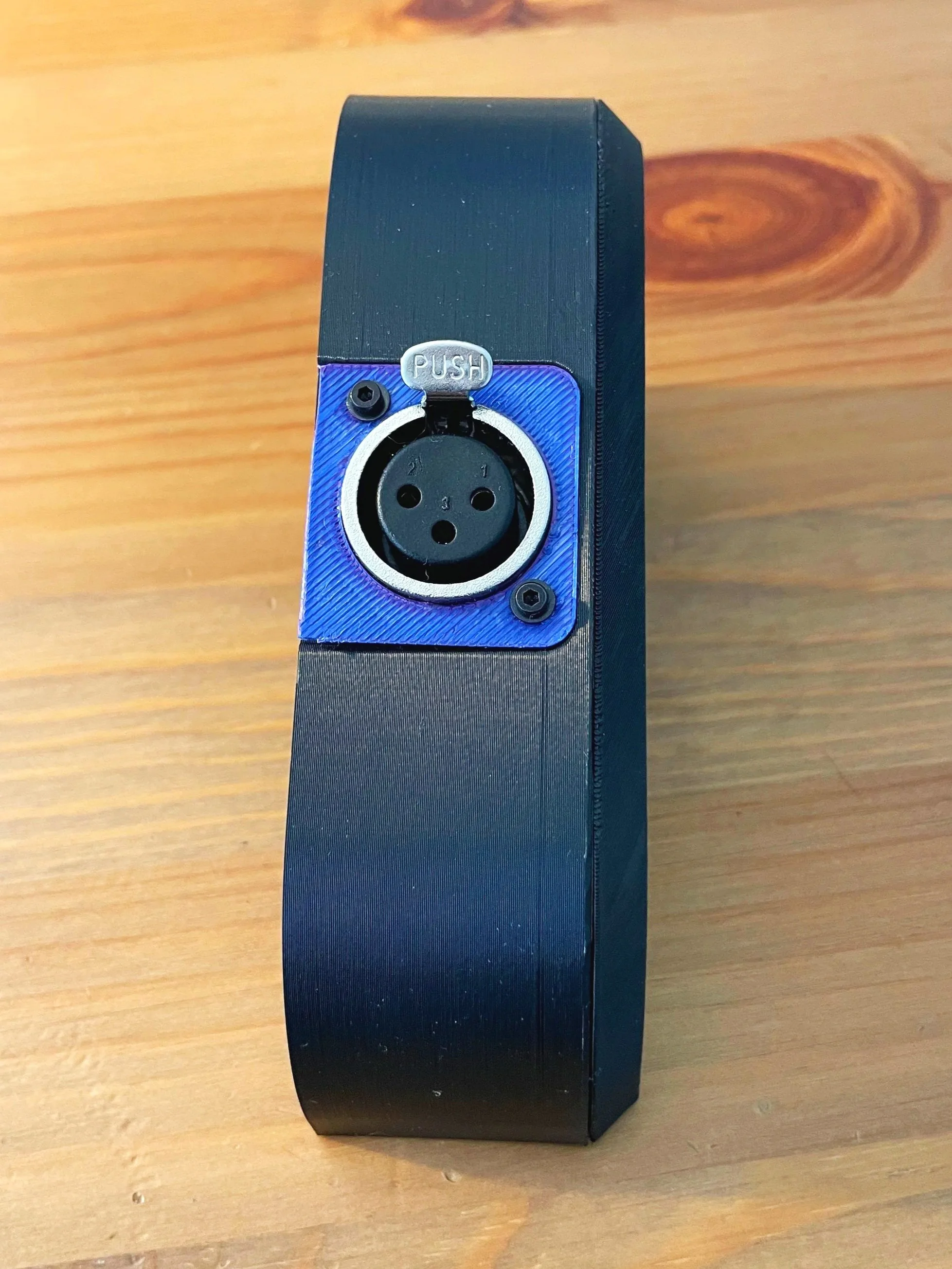
Explored ten design iterations, ultimately moving to a four-part enclosure with fixed cantilevers, sliding rails, an integrated faceplate, and a redesigned grommet.
Prototype
Tested multiple approaches to create a secure, clean assembly without relying on exposed fasteners.
Revision
The four-part architecture emerged as the strongest direction. The remaining work centered on dialing in cantilever depth, mating geometry, faceplate fit, and assembly tolerances.
Cycle 6: Final Refinement
Design
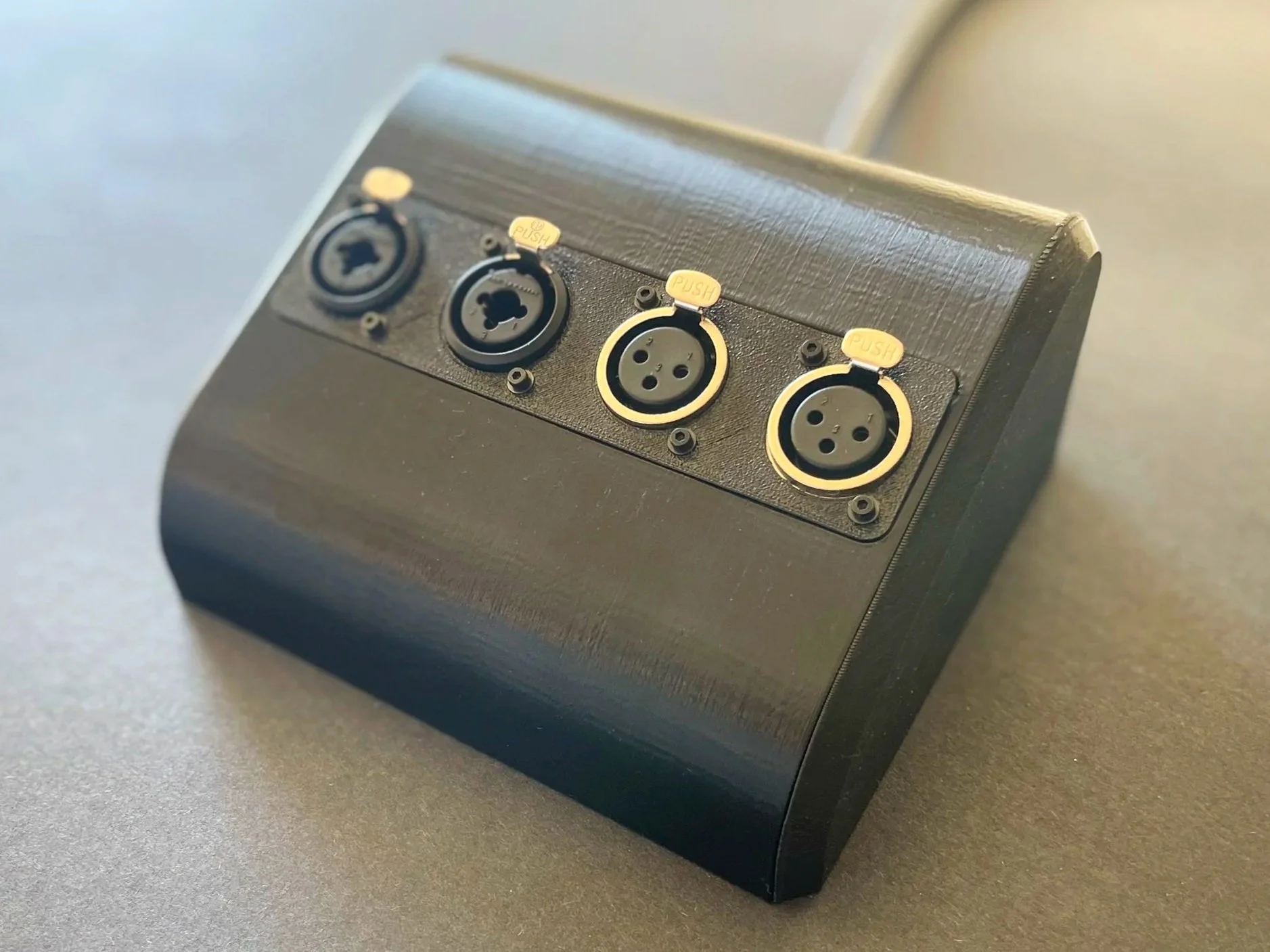
Refined the final mating geometry, base-cantilever connection, perpendicular panel interfaces, and grommet proportions. Switched from ABS to PETG.
Prototype
Validated the final form and material through physical prototypes.
Revision
The enclosure finally achieved the desired sleek, studio-ready character. Remaining refinements focused on XLR clearance, faceplate warping, rear weight distribution, and base stability.